When Emma “Feather” Ramirez departed for the Colorado Trail in June 2025, she carried more than just the usual map, water filter and boots. She carried a question: “How minimal can I go without losing the joy of the journey?”
By the time she reached Durango in late August, she had proven one answer: paring down gear doesn’t mean losing the experience—it can mean deepening it.
The Beginning: Why She Chose Ultralight
Emma isn’t a thru-hiker by birth, but by calling. A year earlier, she had completed a 300-mile section of the Appalachian Trail and came back with a nagging thought: why was I carrying so much stuff just to go slow and feel weighed down?
She started researching gear. What began as light tweaks evolved into an obsession: titanium cook kits, DCF tarps, and replacing bulky boots with trail runners. By spring, she had built a pack with a 7-lb base weight—including shelter, sleep system and backpack (excluding food, water and consumables). That’s significantly below the typical ultralight threshold of 10–12 lb.
She wasn’t chasing records—she was chasing ease, freedom, connection. “When I carried less,” she says, “the mountains felt bigger, the mornings longer, and the trail itself became the reward.”
On the Trail: The Colorado Challenge
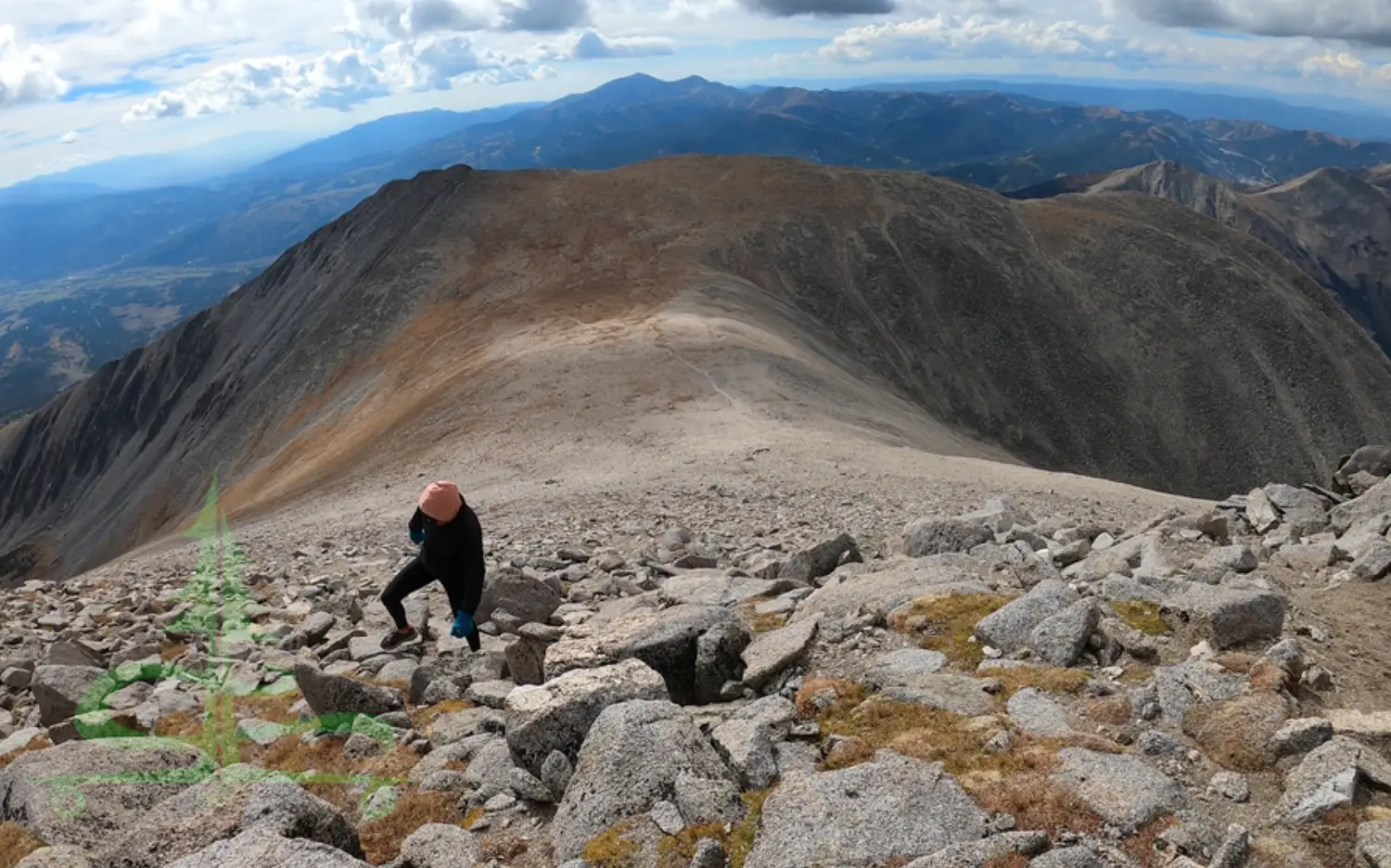
Starting in Durango, Colorado, Emma hiked north and then east across 486 miles of rugged terrain, including high alpine passes, snowfields, and monsoon storms. Her gear list included:
- A 32-litre ultralight pack (1.6 lb)
- Sil-nylon tarp (7 oz)
- 20°F down quilt (11 oz)
- Carbon trekking poles
- Minimal first-aid kit, one set of clothes and a lightweight stove
She did not carry a tent, heavy jacket or extra pair of boots. The mindset: if it wasn’t essential, she left it behind.
But the trail didn’t go easy. One night, she set up her tarp in 50 mph wind gusts at 12,400 ft. Her minimalist shelter held—but her pack faltered when she swapped rain gear for weight savings too early. Lesson learned: ultralight isn’t no light.
By mile 300 she paused at Silverton for resupply. She discovered that the number of blisters she’d had was dramatically less than last year—even though she covered more elevation and more technical terrain. Why? Less bulk and better mobility. She climbed, descended and moved through terrain with more fluidity, more joy.
The Culmination: What She Found
When Emma reached Durango on August 28, she strolled into town with her pack weighing around 11 lb (consumables standing). She sat down and reflected:
- Time freed up — fewer gear management hours; more miles.
- Mind clear — lighter load meant less worry about what she wasn’t carrying.
- Trail as the reward — the gear became invisible; the view took center stage.
She realized the true win wasn’t weight, but freedom. Not carrying things isn’t the point; moving without them is.
Why It Matters for Us
In the world of ultralight hiking, Emma’s story is neither extreme nor niche—it’s practical, inspiring and realistic. It demonstrates:
- You don’t need custom boutique gear to go light—purposeful choices matter.
- Ultralight setups allow better mobility and trail experience when done right.
- Community and culture are stronger than the numbers—gear supports the journey, not defines it.
What You Can Take From It
- Start with “Why” — Ask yourself: what experience do I want? Then let gear support that.
- Cut smart, not blind — Shelter, sleep, backpack = Big Three. Get them right before trimming socks.
- Test on small trips — Before running big miles, test your gear, conditions and mindset.
- Balance is key — She carried less—but still carried enough. Reducing risk isn’t a badge, it’s a choice.
- Share your story — Ultralight is culture. Talk to the folks behind you and those ahead; the trail is better when we move together.
Looking Ahead
Emma has already set her next target: a 1,200-mile circuit in British Columbia’s Purcell Wilderness with a base weight goal of 6.8 lb. She’s not chasing records—she’s chasing clarity through movement.
For everyone using the mountain as a mirror, or the trail as a teacher, her advice remains the same: pack less, live more.